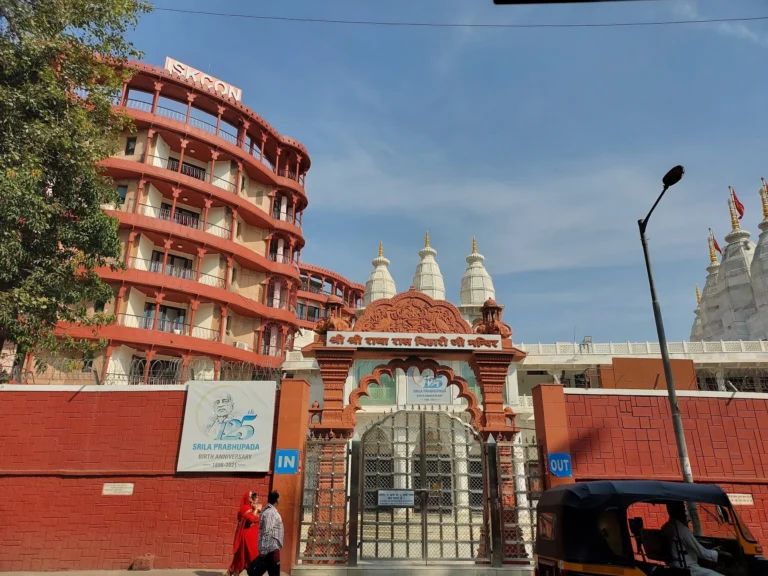
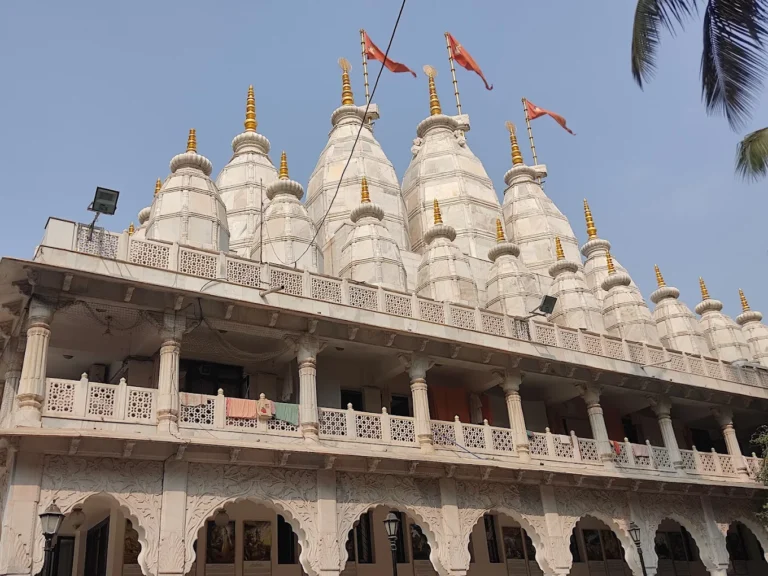
ISKCON Juhu: The Inspiring History of the “Spiritual Clinic” on the Juhu Shore
The electric intensity of Juhu—from film studios to beach crowds—can leave you feeling like a transient face in a city of millions. ISKCON Juhu is the “solution” to this urban restlessness. Stepping into this four-acre sanctuary, the noise of the city is replaced by the rhythmic chanting of the Maha Mantra. It is a portal to a timeless existence that offers spiritual grounding in a landscape of luxury and pace.
The Story of a Vision:
From a New York Storefront to the Mumbai Coast The HISTORY OF ISKCON TEMPLE in Juhu is a remarkable narrative of faith and persistence. The temple was built in 1978, but its spiritual seeds were sown years earlier by A.C. Bhaktivedanta Swami Prabhupada.
HISTORY OF ISKCON TEMPLE:
In 1965, at the age of 69—a time when most look for the comfort of retirement—Swami Prabhupada boarded a steamship from Mumbai to the United States with only a few rupees and a trunk of books. He founded the International Society for Krishna Consciousness in a humble storefront in New York City before returning to India to establish this grand sanctuary in Juhu. At the time, Juhu was a relatively remote part of the city, but Swami Prabhupada envisioned it as a “spiritual clinic” for the modern soul. Today, the marble and glass structure stands as a monument to that vision, housing vibrant deities of Radha-Rasabihari that were personally installed by the founder.
Exploring the Heart of Hare Krishna Land.
Walking toward the main shrine is an experience for all the senses. You will pass through courtyards filled with the scent of fresh incense and flowers, and the walls are adorned with stunning paintings depicting scenes from the Mahabharata. A unique “hidden secret” of the ISKO TEMPLE is the Govinda’s vegetarian restaurant located within the complex. It serves “Saatvik” food—dishes believed to contain the qualities of truth and peacefulness—offering a culinary solution to the “problem” of finding pure, traditional meals in a modern city. For those seeking deeper immersion, the complex also features robot shows that use technology to explain ancient Vedic wisdom, and a seven-storey guesthouse for those who want to wake up to the sound of temple bells.
Planning Your Peaceful Visit
If you are planning to visit, the best time to experience the true energy of the temple is during the early morning hours. The gates open at 4:30 AM for the Mangala Aarti, the first worship of the day. Arriving early allows you to see the deities beautifully decorated with fresh flowers before the midday crowds arrive. While the festival of Janmashtami (in August or September) draws millions of devotees, those looking for a quiet “darshan” will find the months between October and March to be the perfect solution, as the Mumbai heat is much milder.
HOW TO GO THERE:
TRAIN: Take the Western Line to Vile Parle (West). From the station, take an auto-rickshaw (approx. 10–15 mins) to “Hare Krishna Land.”
BUS: Take any bus to Juhu Bus Depot or Mithibai College. It is a short walk/rickshaw ride from there.
TAXI: Set destination to “ISKCON Juhu.” From South Mumbai, it takes about 1 hour via the Sea Link/Coastal Road.
Forget the hassle and choose CABTAN—Mumbai’s most punctual and affordable cab service. Our trained drivers ensure a safe, reliable, and completely worry-free journey. Fill out the form below to book your ride now.